
I build infrastructure for decisions that can't afford to be wrong.
Founder, operator, and advisor across telecom, payments, retail energy, ocean governance, and now enterprise AI. 30+ years building platforms ahead of institutional readiness.
35+ countries · 5 domains, one pattern


The Age of Intelligence
How Power, Work, and Value Are Being Rewritten
Five exponential technologies are converging into a new operating system for civilization. This field guide is for decision-makers who sense the shift but haven't seen the whole map — and are ready to build before every answer is clear.
About
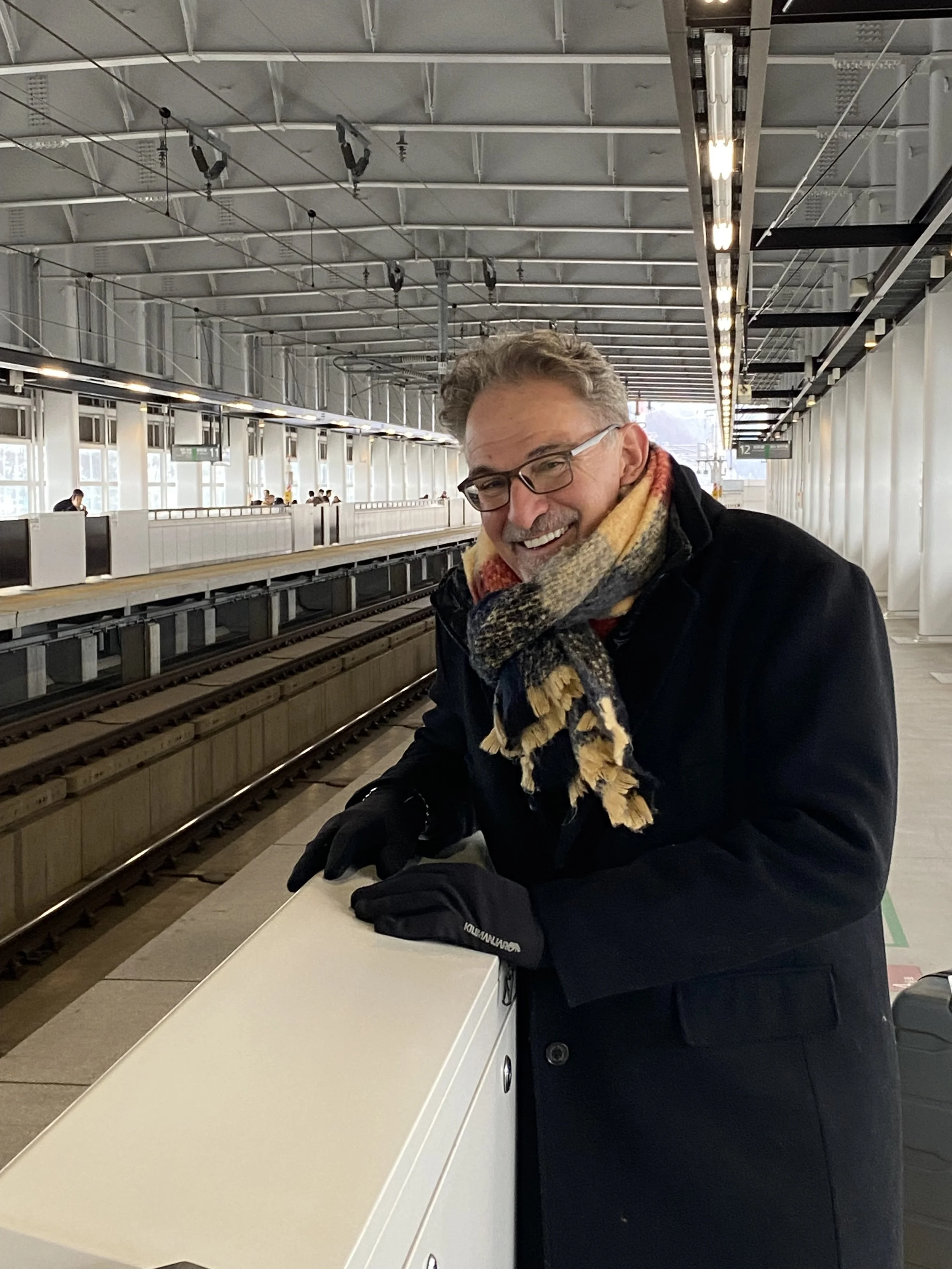
The pattern across 30+ years
The same infrastructure problem keeps appearing in different domains. The system that should exist doesn't. The institutions aren't ready to build it. The decisions that depend on it can't afford to wait.
I specialize in turning bold, unorthodox ideas into executable platforms — usually before the market, the institutions, or the infrastructure is ready for them.
How I Engage

Co-founder, CEO, president, interim operator. For ventures that need someone to build and lead at the senior level — not just advise. I come in when the infrastructure doesn't exist yet and the decisions can't afford to wait. Relevant for early-stage and transition-stage ventures in enterprise AI, data infrastructure, ocean governance, and energy transition.
Operating Roles

Partnering with founders, funds, family offices, and institutions to navigate complexity — from idea to infrastructure, from thesis to traction. I work best where the stakes compound, the domain is hard, and the existing playbooks don't apply. Especially relevant for family offices and next-gen principals shaping capital strategies around intelligent infrastructure and pre-institutional ideas that don't fit the traditional mold.
Advisory & Strategic Engagements
Portfolio & Case Studies
See Select Projects
A portfolio of real-world tests. Some early, some scaled, some still unfolding. Each pushed the edge of what was possible, often before the market or system was fully ready. Together, they offer insight into how meaningful innovation actually moves.

-
Nobody Owns the Whole Picture. Until Someone Does.
✴️ BSIWS (BellSouth International Wireless Services)
Role: Conceptual Lead & Business Architect
Context
BellSouth owned mobile operators across Latin America but nobody owned the connections between them. When a customer from Colombia showed up in Florida, we manually loaded them into local systems, tracked call records by hand, and settled billing after the fact. The technology existed. The operating system around it didn't. Nobody was accountable for the whole — just the parts.
What I Did
I was asked to streamline a process. What I saw was a structural gap and a real opportunity. I built the business case for a regional clearinghouse that could automate roaming across every market we operated in, sourced executives from existing clearing platforms, and pushed the concept through an organization that kept managing spokes without seeing the hub.
Outcome
BSIWS launched as the first platform to unify BellSouth's Latin American networks — turning roaming from a manual workaround into a scalable, revenue-generating asset. What started as a back-office problem became a strategic advantage that took competitors years to match.
Lesson
Complex systems often fail not because the pieces don't work but because nobody owns the whole picture. The clearinghouse happened because someone decided to be accountable for the system, not just their part of it. That's the work that rarely has a job title — and it's almost always where the real leverage lives.
-
When Winning Becomes the Obstacle
Company: ✴️ Infonet (Global Managed Network Services Provider)
Role: Vice President, Communication Solutions
Context
Infonet ran one of the world's largest private IP networks. The core MPLS business was dominant, profitable, and consuming all the oxygen in the room. Four other business lines — mobility, security, multimedia, and messaging — were getting buried under its weight. They weren't failing. They were being ignored. The organization was too successful at what it already did to see what it could do next.
What I Did
I restructured and repositioned all four units — isolating them operationally, clarifying their role, and building a dedicated overlay sales force to take them to market. The more important move was connecting them back to the core as complements rather than orphans. Revenue tripled to $190M in three years.
Outcome
The repositioned units gained real traction and became a meaningful part of what made Infonet attractive to British Telecom — one of several factors that drove the acquisition. What the organization had treated as noise turned out to have genuine market value.
Lesson
The services weren't the problem. The mindset was. A dominant business line builds its own gravity — everything outside it gets treated as distraction. The work wasn't changing that culture, which is usually a losing fight. It was building a structure around it that let the right things move without waiting for permission from the core. Success is the hardest thing to see past. The organizations that figure out how to do it anyway are the ones that last.
-
Climate Isn't the Risk. Ignoring It Is.
Company: ✴️ Griddy (U.S. Retail Energy Platform)
Role: Co-Founder, Chief Marketing & Product Officer
Context
Griddy was the first U.S. platform to give consumers direct access to the real-time wholesale electricity price. For a flat monthly fee, customers bypassed the utility markup entirely — buying power at cost, with full visibility into hourly pricing and day-ahead forecasts. The platform worked. The product scaled. Then the Texas grid failed in February 2021 — and everything that had been ignored about climate risk became impossible to ignore.The platform worked.
What I Did
As CMO and CPO, I helped design, build, and scale the platform — leading brand, growth, and product. We built something that made energy genuinely transparent and actionable for everyday consumers. What we didn't fully account for — and what our capital partners were structurally unprepared for — was the climate variable. Our investors came from traditional energy. They understood margin extraction, not platform resilience in a climate-volatile environment.
Outcome
Griddy was forced to shut down. The platform and customer base were sold.
We were one of the first companies to collide with climate-era systems failure at scale — a working model taken down by prolonged volatility, political backlash, and capital that wasn’t for the environment it was operating in.
Lesson
Climate isn't an external risk you manage around. It has to be built into the design from the start — into the capital structure, the operating model, the infrastructure assumptions. Griddy was an early collision with a reality the market is still catching up to: any platform that depends on physical infrastructure needs to price in climate volatility as a core requirement, not an asterisk. That lesson applies well beyond energy.
-
A Product Both Industries Wanted. Neither Would Share.
Company: ✴️ Klarum (Telecom–Banking Mobile Payments)
Role: Co-Founder & Systems
Context
Klarum was an early mobile payments platform built on existing telecom and credit card infrastructure — no new apps, no new hardware. A smart way to connect systems already in place, enabling real-time purchases through SMS and phone billing. Two large institutions — a telecom and a bank — were ready to pilot. The technology was approved. The tests ran clean. Both industries saw the value. That turned out to be the problem.
What I Did
I co-founded Klarum and helped design it as a neutral platform that multiple banks and mobile operators could participate in without any single institution controlling the customer relationship. We built the platform and completed technical approvals. But the deeper challenge was ownership: the bank saw it as a financial product. The telecom saw it as a mobility feature. Neither was wrong. And neither would share.
Outcome
The platform never launched. When cooperation broke down, the contingent capital disappeared with it. The product worked. The structure around it didn't.
Lesson
Two industries looked at the same product and each saw something they wanted to own exclusively. That's not a technology problem — it's a governance problem. Klarum sat between two powerful institutions with no framework for shared ownership and no incentive to build one. The blind spot wasn't the opportunity. It was the assumption that the right product would be enough to get competing institutions to collaborate. It rarely is. Structure has to come first.
-
When the Herd Decides What's Possible
✴️ ClearWidth (Network Optimization Platform) Role: Market Entry & Commercialization Lead
Context
ClearWidth had real technology — a network optimization platform built around proprietary high-performance chip architecture that drove both the functionality and the cost advantage. It wasn't just software. It wasn't just hardware. It was both working together in a way that created genuine performance advantages. That turned out to be the problem — not technically, but in terms of timing and investor sentiment.
What I Did
We repositioned the offering multiple ways — OEM deals, integration plays, direct market entry — and the product held up at every turn. The harder wall was the funding environment. Silicon Valley had collectively decided hardware was out and software was in. Investors move in clusters around what's hot, and at that moment anything with a hardware component was being passed over regardless of what it actually did. We had a clear path to market and genuine performance advantages. We couldn't raise the capital needed to scale it.
Outcome
ClearWidth was acquired in 2014 at approximately 2.5x return — a real outcome, but well short of what the platform could have become with the right capital behind it. The technology was sound. The funding environment wasn't.
Lesson
Investor consensus in concentrated markets isn't always rational — it's social. When the herd decides a category is out, legitimate technology gets left behind regardless of its merits. Timing matters enormously, but so does understanding that the market's current judgment isn't the final one. The window closes. Then it opens again. The question is whether you're still standing when it does.
-
When the Problem Is Bigger Than Any Single Mandate
Company: ✩️ Vital Ocean
Role: Co-Founder & AdvisorThe Situation
Marine decisions are still being made with fragmented data, siloed institutions, and governance that hasn't caught up to the scale of the problem. Even where sensors, models, and AI tools exist, the insights are scattered and hard to act on. Protection stays symbolic when the operating infrastructure for enforcement, planning, and coordination isn't there.
The Opportunity
Vital Ocean is building the foundation for coordinated, data-driven ocean governance — an Ocean Operating System. Not a dashboard, not another dataset. A platform layer that integrates data, runs simulations, and translates marine science into decisions usable by regulators, NGOs, insurers, and developers. At the core: OceanIQ (digital-twin and decision platform) and OceanGPT (an ocean-specific AI copilot).
My Role
I owned the work required to move the concept from vision to something a partner, buyer, or funder could actually evaluate and act on.
What I Produced
Co-authored white paper · Business plan · Total solution costing and unit economics · Financial model · Integrated platform strategy (OceanIQ)
Where it Stands
Vital Ocean advances through project-driven development — building core components through real engagements rather than waiting on a single institutional funder. A tidal-energy digital twin is already supporting turbine feasibility planning for a Salish Sea use case. OceanGPT, co-developed with IPOS, is in active use. What started as a campaign is turning into infrastructure.
Lesson
The biggest systems don't stall because they're unworkable. They stall because they live between institutional mandates — no single funder owns the whole problem. Vital Ocean didn't try to fit that structure. We built through use: fund the components through real projects, let working software become working infrastructure, and let the platform prove itself through deployment. Some problems are too important to wait for the right funding category to exist. You build anyway.